
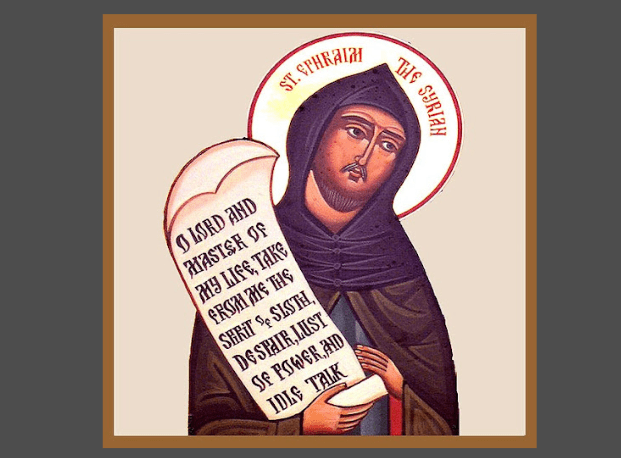
Scripture brought me
to the gate of Paradise,
and the mind, which is spiritual,
stood in wonder and amazement as it entered,
the intellect grew dizzy and weak
as the senses were no longer able
to contain its treasures
—so magnificent they were—
or to discern its savors
or find any comparison for its colors,
or take in its beauties
so as to describe them in words.1
—
With Saint Ephrem above, I stand in wonder. For I see Scripture (and the world to which it testifies) with a dizzy new eye. But unlike the sainted Syrian, I do not always humbly know my intellect’s limitations.
My impulse is more like blessed Peter’s, who—having beheld His transfigured face—is quick to speak, knowing not what he says.2 Thus I quickly tried to explain my discoveries in writing (as was my custom), and discovered: I can’t write anymore; at least not about deeper, spiritual things. It all seems mere idle talk.
But why can’t I write? Well, how can I write? For it is written elsewhere:
The LORD is in His holy temple;
let all the earth be silent.3
What, then, shall we do, who discover the whole cosmos is His temple—who now see His divine energies “everywhere present and filling all things?”4
Why, again, can’t I write? For the same reason the silent fool is counted wise;5 real words, full of real life, come only from persons who speak what they know, and testify to what they have seen.6 Who am I to speak, to testify, of Immortal Majesty?
Why can’t I write? Why do words elude me? Because:
You are God ineffable,
inconceivable, invisible, incomprehensible,
ever-existing and eternally the same.7
So as Holy Lent draws near, and I begin to write again, I shall restrict myself, at least for a time, to more basic matters. For serious spiritual reflection, I make mine the words of the Scriptures, Saints, and divine services of the Church:
O Lord and Master of my life,
take from me the spirit of sloth, despair,
lust of power, and idle talk.
But give rather the spirit of chastity,
humility, patience, and love to Thy servant.
Yea, O Lord and King,
grant me to see my own transgressions,
and not to judge my brother,
for blessed art Thou, unto ages of ages.
Amen.8
—
Notes
1. St. Ephrem the Syrian (Trans. Sebastian Brock), Hymns on Paradise 1.4.
2. Luke 9:33.
3. Habakkuk 2:20.
4. O Heavenly King prayer.
5. Proverbs 17:28.
6. John 3:11; cf. 1 John 1:1–2ff.
7. From the Anaphora prayer of the Divine Liturgy of St John Chrysostom.

 Theology for Real Life